Improving Your Credit Decision Engine Efficiency
- Credhive Fintech
- Apr 29
- 4 min read

In today's fast-paced financial landscape, the efficiency of your credit decision engine can significantly impact your business's success. With the rise of digital lending and the increasing demand for quick credit decisions, optimizing your credit decision engine is not just a luxury—it's a necessity. This blog post will explore practical strategies to enhance the efficiency of your credit decision engine, ensuring that you can meet customer expectations while minimizing risk.
Understanding the Credit Decision Engine
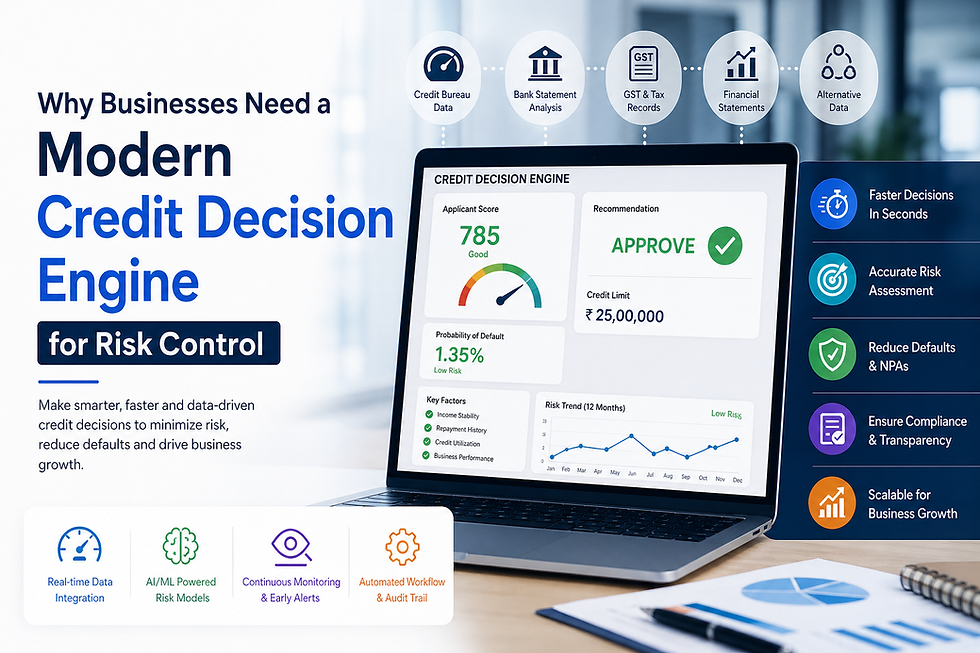
Before diving into improvement strategies, it's essential to understand what a credit decision engine is. At its core, a credit decision engine is a system that evaluates the creditworthiness of applicants based on various data points. This system analyzes credit scores, income levels, debt-to-income ratios, and other relevant factors to determine whether to approve or deny a credit application.
Key Components of a Credit Decision Engine
Data Collection: Gathering accurate and comprehensive data is crucial. This includes credit reports, financial statements, and other relevant information.
Risk Assessment Models: These models analyze the collected data to predict the likelihood of default.
Decision Algorithms: Algorithms process the data and risk assessments to make real-time decisions on credit applications.
User Interface: A user-friendly interface allows lenders to interact with the system efficiently.
The Importance of Efficiency in Credit Decision Engines
Efficiency in credit decision engines translates to faster processing times, improved customer satisfaction, and reduced operational costs. Here are some reasons why efficiency matters:
Customer Expectations: In a world where instant gratification is the norm, customers expect quick responses to their credit applications. Delays can lead to lost business.
Competitive Advantage: An efficient credit decision engine can set your business apart from competitors, attracting more customers.
Cost Reduction: Streamlining processes can reduce the resources needed for manual reviews, leading to significant cost savings.
Strategies to Improve Your Credit Decision Engine Efficiency
1. Automate Data Collection
Manual data collection can be time-consuming and prone to errors. Automating this process can significantly enhance efficiency. Consider integrating APIs that allow for real-time data retrieval from credit bureaus and financial institutions. This not only speeds up the process but also ensures that the data is accurate and up-to-date.
2. Implement Advanced Analytics
Utilizing advanced analytics can improve risk assessment models. Machine learning algorithms can analyze vast amounts of data to identify patterns and predict outcomes more accurately than traditional methods. By continuously learning from new data, these models can adapt to changing market conditions and borrower behaviors.
3. Optimize Decision Algorithms
Review and refine your decision algorithms regularly. Ensure they are aligned with your risk appetite and business goals. Consider using a tiered approach, where different algorithms are applied based on the risk level of the applicant. For example, low-risk applicants could be processed through a simpler algorithm, while high-risk applicants undergo a more thorough review.
4. Enhance User Experience
A user-friendly interface can streamline the application process for both customers and staff. Ensure that your system is intuitive and easy to navigate. Providing clear instructions and feedback can reduce the time spent on applications and improve overall satisfaction.
5. Continuous Monitoring and Feedback
Establish a system for continuous monitoring of your credit decision engine's performance. Collect feedback from users and analyze decision outcomes to identify areas for improvement. Regularly updating your models and algorithms based on this feedback can help maintain efficiency over time.

Case Studies: Success Stories in Credit Decision Engine Efficiency
Case Study 1: FinTech Company A
FinTech Company A implemented an automated data collection system that integrated with multiple credit bureaus. As a result, they reduced their application processing time from 48 hours to just 15 minutes. This improvement not only enhanced customer satisfaction but also allowed the company to handle a higher volume of applications without increasing staff.
Case Study 2: Traditional Bank B
Traditional Bank B adopted machine learning algorithms for their risk assessment models. By analyzing historical data and borrower behavior, they improved their default prediction accuracy by 30%. This led to more informed lending decisions and a significant reduction in loan defaults.
Challenges to Consider
While improving your credit decision engine's efficiency is essential, it's not without challenges. Here are some common obstacles you may face:
Data Privacy Concerns: With increasing regulations around data privacy, ensuring compliance while collecting and processing data is crucial.
Integration Issues: Integrating new technologies with existing systems can be complex and may require significant investment.
Resistance to Change: Employees may resist new processes or technologies. Providing training and demonstrating the benefits can help ease this transition.
Future Trends in Credit Decision Engines
As technology continues to evolve, so will credit decision engines. Here are some trends to watch for:
Artificial Intelligence: AI will play a more significant role in automating decision-making processes and enhancing risk assessment models.
Blockchain Technology: Blockchain could provide a secure and transparent way to verify borrower identities and credit histories.
Real-Time Decision Making: The demand for instant credit decisions will drive the development of systems that can analyze data and make decisions in real-time.
Conclusion
Improving the efficiency of your credit decision engine is not just about keeping up with the competition; it's about meeting customer expectations and minimizing risk. By automating data collection, implementing advanced analytics, optimizing decision algorithms, enhancing user experience, and continuously monitoring performance, you can create a robust credit decision engine that serves your business well.
As you consider these strategies, remember that the landscape is constantly changing. Stay informed about emerging technologies and trends to ensure your credit decision engine remains efficient and effective. Take the first step today by evaluating your current processes and identifying areas for improvement. Your customers—and your bottom line—will thank you.


Comments